
- Your challenge
- Heat, water or materials leave your operation without creating enough value.
- How we help
- Build an evidence-based system model and test the most useful intervention in representative conditions.
- What you gain
- A practical development route supported by operating data, prototype evidence and integration requirements.
Define the resource problem behind the operating symptom
A plant may use more energy or water than expected without a clear explanation of where a practical improvement is possible. Losses can be distributed across equipment, operating schedules and quality requirements. A recovery opportunity may also look attractive until the cost of preparing, moving or treating the stream is considered.
DeploySci helps turn these symptoms into a focused development question. We examine the useful output, relevant flows and the conditions under which performance changes. The brief identifies the loss or missed opportunity worth addressing and the requirements any intervention must respect. This gives your team a defined basis for investigation instead of a general instruction to improve efficiency.
Investigate gaps in measurement and process understanding
We review operating records, measurement coverage and existing explanations for the loss. The first question is whether the available evidence supports a reliable comparison. Missing context about load, feed quality or production mix can make an apparently good operating period misleading. We identify what is known, what is inferred and what a targeted measurement could resolve.
Research compares available approaches and the limits they encounter in your setting. Modernization may begin with a better view of the existing process or a small adaptation rather than a new unit operation. Where the desired capability does not exist, we define the scientific or engineering question that needs R&D and the evidence required to justify a prototype.
Build the proposition around useful recovery or avoided loss
The value proposition states what the operation gains: heat delivered to a suitable use, water recovered to an acceptable quality or less resource consumed for the same accepted output. We examine how that benefit relates to production needs and who will be responsible for maintaining it. A stream has practical value only within a viable use and handling context.
We agree the baseline and relevant measures, including quality, stability and operating burden. Claimed savings remain hypotheses until supported by appropriate evaluation. This makes the programme easier to assess because the expected benefit is connected to observable performance and the work required to obtain it, with any environmental comparison based on explicit boundaries.
Explore the intervention through computational experiments
The virtual lab uses available process knowledge and operating evidence to compare plausible interventions. Models help investigate interactions, examine changing demand and explore the sensitivity of the expected benefit to uncertain inputs. We match the level of detail to the decision rather than building a complex representation without a clear purpose.
The outcome is a comparison of routes and a testable development proposition. It may reveal that an option is useful only under certain conditions or that a different integration point deserves attention. Those findings guide the physical work. Your team can see what the model supports and which behaviour must be established through measurement or prototyping before an operational change is credible.
Prototype the mechanism that could limit the benefit
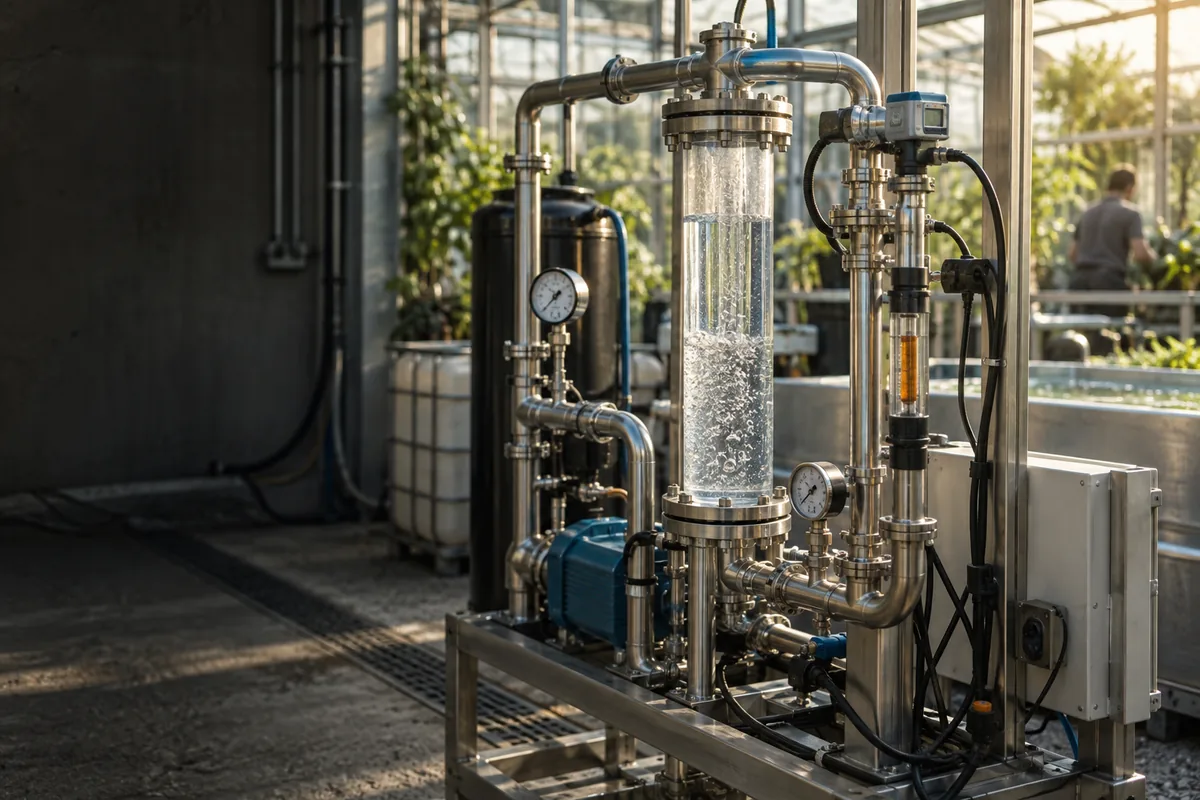
A focused laboratory or pilot setup examines the critical interaction using representative materials and conditions. For water reuse, the unresolved issue may concern variable feed quality and the fitness of the output for its next use. For energy recovery, it may concern response to changing loads or the performance of an interface under realistic operation.
Tests compare the proposed route with an appropriate reference and examine repeatability, degradation and secondary burdens. Specialist facilities are scoped as needed. The findings refine the model and the candidate intervention, creating a learning cycle between computation and physical evidence. Your prototype serves a defined decision about whether the route can deliver useful value in the intended process.
Prepare a realization strategy for the actual site
Deployment planning addresses utilities, interfaces, space, access and the opportunities available for installation and trial. We work with operating and engineering teams to identify the modifications required and the capabilities that can be retained. The plan separates unresolved research from detailed engineering and site execution so responsibilities remain clear.
A representative pilot is chosen to establish the intended benefit within a manageable scope. Acceptance considers output quality and operational compatibility alongside resource use. Where further specialist design or approvals are needed, these form explicit dependencies in the development route. This helps your team make the next commitment with a realistic view of the work between laboratory promise and sustained operation.
Put the evidence to work and review impact
Your agreed handover can include the process assessment, computational comparison, pilot findings and implementation requirements. We document relevant operating limits and the evidence supporting the selected route. The package enables your organization or engineering partners to continue development with a clear understanding of the proposition and its remaining assumptions.
After introduction, performance is reviewed across the conditions that affect benefit. Changes in load or feed can create new questions, so ownership of monitoring and refinement is established. The intended outcome is a resource improvement the operation can explain and sustain, with a connected route for adapting the solution as production needs evolve.
What would progress look like?
Tell us what needs to work better and where the technical uncertainty sits. We will help define a focused R&D, prototype or deployment engagement.
Get Started↗